News

Theme images by kelvinjay. Powered by Blogger.

Health

Hollywood

Movies

KARAOKE

China

TV Khmer

Cold-water swimming: What are the genuine dangers and medical advantages?

"IT'S similar to squeezing Control-Alt-Delete on a PC," says Cath Pendleton. "At the point when I'm in the water, I'm so centered around my body, my cerebrum turns off. It's simply me and the swim." 

Pendleton, an ice swimmer situated in Merthyr Tydfil, UK, is hardier than most. In 2020, five years in the wake of finding she wouldn't fret swimming in freezing water, she turned into the principal individual to swim a mile inside the Antarctic circle. Some portion of her preparation included sitting in a cooler in her shed. 

She is a long way from alone in her excitement for cold water, in any case. On account of media reports of the emotional well-being advantages of a cold plunge and pool terminations due to Coronavirus, taking off numbers are presently taking to waterways, lakes and the ocean – when the jam of a small bunch of genuinely intense all year swimmers. An expected 7.5 million individuals swim outside in the UK alone, with an expanding number swimming through the colder time of year. Worldwide figures are rare, yet the International Winter Swimming Association has seen a blast in enrolled winter swimmers all throughout the planet, even in China, Russia and Finland, where water temperatures can dip under 0°C. 

In any case, is there much else to it than the delight of being in nature, joined with the unreasonable rapture of resisting the virus? As per the most recent examination, the appropriate response is possibly. Ongoing examinations have started to turn up proof that chilly water drenching may lighten pressure and melancholy and help tackle immune system issues. It may even take advantage of a …

UK should draw harder air contamination lines, says Kissi-Debrah coroner

A coroner has asked the UK government to force harder lawful cutoff points on air contamination in accordance with World Health Organization (WHO) rules, to forestall more passings like those of 9-year-old Ella Kissi-Debrah. 

An examination a year ago by coroner Philip Barlow into the demise of Ella in 2013 found that her openness to perilously filthy air in London had assumed a material part. She lived and strolled to class in a space of south London that oftentimes penetrated UK limits for air contamination. 

In a report distributed today on forestalling future passings, Barlow made three proposals. He said the public authority should reinforce the UK's air contamination limits, taking note of that they are as of now "far higher" than the WHO's rules. "Legitimately restricting targets dependent on WHO rules would decrease the quantity of passings from air contamination in the UK," he said. 

Barlow added that specialists and attendants are neglecting to adequately impart the wellbeing dangers of openness to messy air, and expert clinical bodies need to address the deficiency. Public familiarity with nearby and public air contamination levels are low, which could be fixed by expanding the quantity of air-quality sensors, he said. 

Rosamund Kissi-Debrah, Ella's mom, says she will ask the UK's current circumstance secretary George Eustice to enact to carry out WHO air contamination rules in the wake of the report. 

Disappointment by the UK government to embrace the more grounded rules would be something she would take by and by, Kissi-Debrah revealed to New Scientist. "It would cause me to feel as though Ella's life and this battle had been to no end. I can't ponder it. Individuals would proceed to kick the bucket and we'd sit idle. I simply need to continue trusting we'd arrive." 

An administration representative said in an explanation: "We will cautiously think about the proposals in the report and react at the appropriate time." 

The UK's legitimate cutoff for a fine particulate type of contamination, PM2.5, is a yearly mean of 20 micrograms for every cubic meter, double the 10 micrograms for each cubic meter in WHO rules. Be that as it may, the hole is set to get more extensive still, as Maria Neira of the WHO says a specialist bunch at the body will before long distribute new rules on particulate contamination. 

"This year in November will be COP26 [the UN environment summit], so we need to ensure this wellbeing contention is infiltrating discussions about environmental change," says Neira. Kissi-Debrah says it would be an embarassment if the UK government didn't follow up on air contamination given it is facilitating COP26 in Glasgow.

Jungle fever antibody from Oxford Coronavirus group is best at any point made

An intestinal sickness immunization demonstrated to be 77% successful in preliminaries – the most significant level at any point accomplished – offers any expectation of controlling an illness that executes an expected 400,000 individuals every year, a large number of them youngsters. 

Adrian Hill at the University of Oxford and his associates trust it tends to be endorsed for use inside the following two years, expanding on the speed and exercises learned through the fast improvement of Coronavirus antibodies – the specialists additionally work on the Oxford/AstraZeneca Covid immunization. 

"With the responsibility by our business accomplice, the Serum Institute of India, to produce in any event 200 million portions yearly in the coming years, the antibody can possibly have a significant general wellbeing sway if licensure is accomplished," he told the PA news organization. 

Slope trusts the immunization will be quickly endorsed following last preliminary outcomes, which he anticipates that the team should report one year from now. 

"Jungle fever killed in any event four fold the number of more individuals in Africa a year ago as Coronavirus did," he said. "No one briefly addressed whether Coronavirus ought to have a crisis use audit and authorisation in Africa – obviously it did, rapidly. So for what reason shouldn't an illness that first and foremost slaughters youngsters instead of more seasoned individuals, surely executed a dreadful parcel more, be focused on for crisis use authorisation in Africa?" 

The primary logical report for an intestinal sickness immunization was distributed in 1910, the principal preliminary of a jungle fever antibody occurred during the 1940s, and 140 intestinal sickness antibodies have gone into clinical testing. Slope said there had been no lack of exertion, however it had quite recently been inconceivably troublesome. "I've been chipping away at intestinal sickness antibodies since 1994 – it isn't 111 years yet at times it seems somewhat like that," he said. 

The World Health Organization (WHO) has set an objective of 75% viability by 2030 for an intestinal sickness antibody, and the new immunization is quick to accomplish that level. "This is incredible, fabulous. We saw the primary glance at these outcomes following a half year a year ago and we were, we were excited," said Hill. 

Charlemagne Ouedraogo, pastor of wellbeing in Burkina Faso, told PA: "Intestinal sickness is one of the main sources of youth mortality in Africa. We have been supporting preliminaries of a scope of new immunization competitors in Burkina Faso and these new information show that licensure of an extremely helpful new intestinal sickness antibody could well occur in the coming years." 

The randomized, controlled, twofold visually impaired preliminary was directed at the Clinical Research Unit of Nanoro and the Research Institute of Health Sciences, Burkina Faso. 

There were 450 members, matured between 5 months and 17 months, who were part into three gatherings, with the initial two gatherings getting either a low portion or a high portion of the immunization applicant. The third gathering got a rabies immunization as the benchmark group. Portions were directed from early May 2019 to early August 2019, generally before the pinnacle intestinal sickness season. 

The investigation reports an antibody adequacy of 77% in the higher-portion bunch, and 71% in the lower-portion bunch, more than a year of follow-up. Analysts didn't take note of any genuine unfavorable occasions identified with the immunization.

Could we at long last crash intestinal sickness with an immunization 37 years really taking shape?

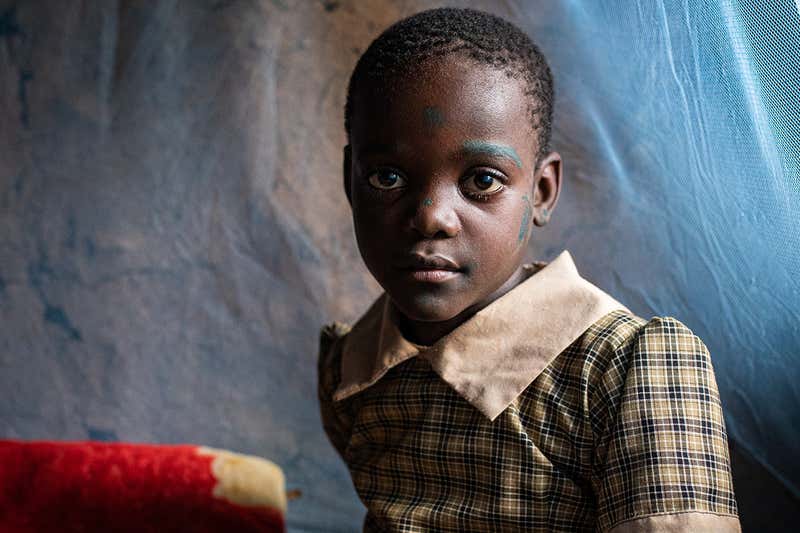
"We ached for it to come," Janet Mula advised me, reviewing her response to hearing that researchers were building up an immunization against intestinal sickness. Mula, a medical caretaker I met while going in country Kenya, has seen the demolition brought about by this illness direct. Every year, it nauseates in excess of 200 million individuals all around the world, slaughtering at any rate 400,000. By far most of cases are in sub-Saharan Africa, with the greatest weight falling on more youthful individuals. "Jungle fever causes numerous entanglements for youngsters – frailty, organ disappointment, jaundice, liver difficulty," says Mula. That could before long change, notwithstanding. While the greater part of the world is zeroing in on new antibodies for the Covid, a large number of Kenyan kids are at last getting a yearned for intestinal sickness immunization, 37 years after improvement on it began. Since 2019, Kenya, Ghana and Malawi have been partaking in a test case program composed by the World Health Organization (WHO). In the event that it is fruitful, the antibody will be carried out to babies across Africa. As this attended press, preliminary consequences of another immunization created by the University of Oxford proposed it was 77% successful.